
In the complex landscape of strategic delivery, the primary threat to ROI isn’t market competition; it’s the gap between the boardroom and the front lines. Organizations often craft brilliant strategies and robust OKRs (Objectives and Key Results), only to see them dissolve into departmental silos, fragmented data, and “death by PowerPoint.”
To bridge this divide, forward-thinking enterprises are adopting a high-velocity management architecture: Obeya.
What is Obeya? (The Central Nervous System)
Originating from the Japanese word for “Big Room,” Obeya is a visual management ecosystem designed to serve as an organization’s central nervous system. It is a dedicated space – physical, virtual, or hybrid- where strategy, performance, and action intersect in real-time.
Instead of hunting for updates across disparate spreadsheets, Obeya creates a Single Source of Truth (SSOT). It transforms abstract goals into a living visual narrative, allowing leadership to see the “pulse” of the company at a glance.
Why Obeya is the Ultimate Execution Engine
Obeya is more than a meeting room; it is a decision-making accelerator. Here is how it recalibrates the way modern teams operate:
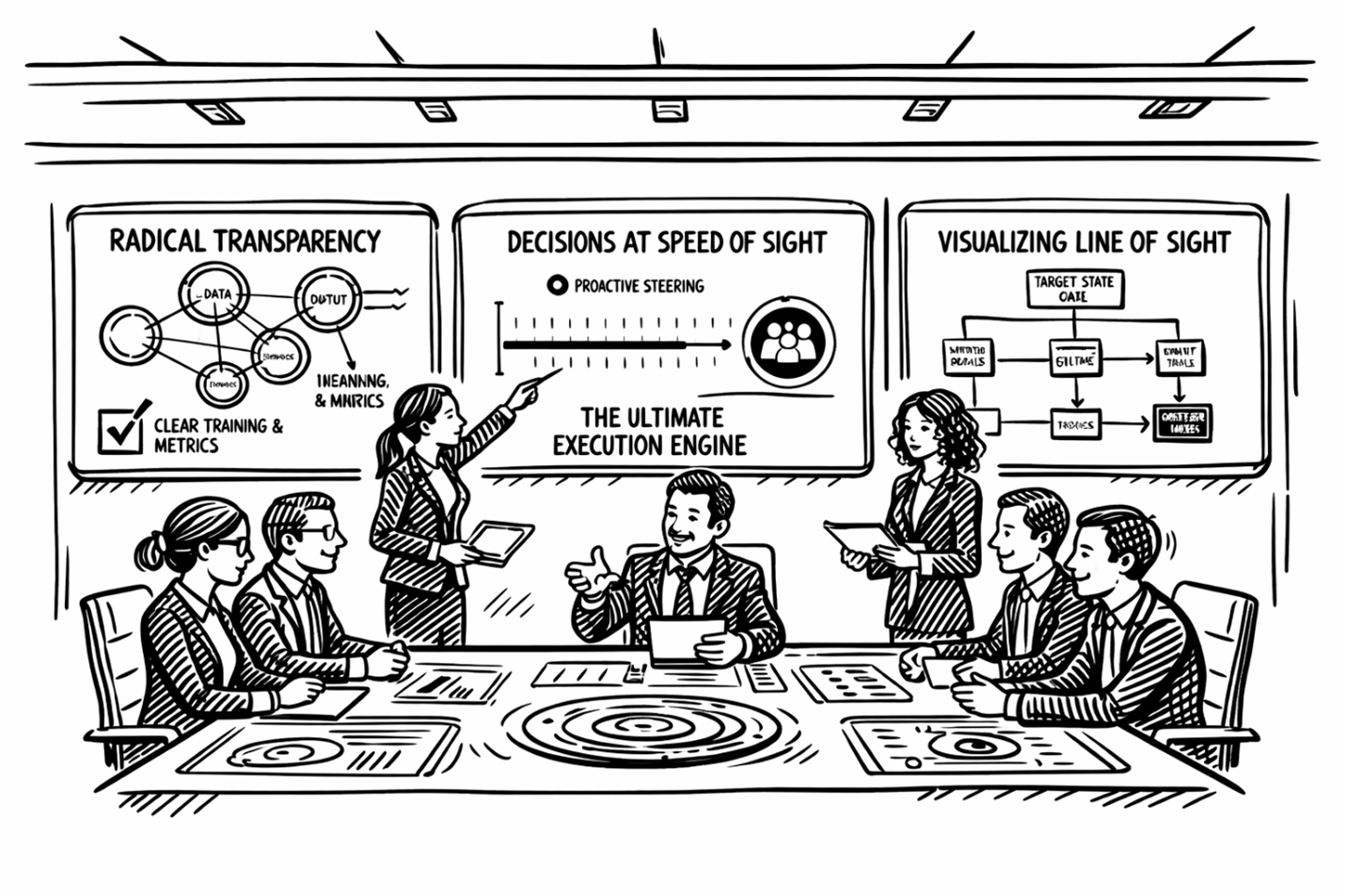
- Radical Transparency: By visualizing dependencies across functions, Obeya eliminates “siloed” thinking. When Marketing, Ops, and Finance look at the same wall, misalignments that usually take months to surface are corrected in minutes
- Decisions at the Speed of Sight: Traditional reporting is reactive (what happened last month). Obeya is proactive. High-frequency “Stand-up Steering” sessions focus on identifying and removing blockers before they derail a milestone
- Visualizing the “Line of Sight”: Obeya makes the connection between daily tasks and North Star goals undeniable. Every project on the board must have a direct connection to a strategic pillar. If it doesn’t move the needle on an OKR, it is immediately identified as “strategic misalignment.”
The Digital Shift: Strategy Without Borders
In today’s distributed work environment, the “Big Room” has moved to the cloud. Virtual Obeyas leverage digital platforms to ensure that global teams remain synchronized 24/7.
- Asynchronous Alignment: Employees can “walk the walls” at any time. A manager in London can review the “Performance Wall” updated by a team in Singapore, ensuring global consistency without “Zoom fatigue”
- Persistent Context: Unlike a standard video call, a Virtual Obeya is a permanent environment. The strategic context is always visible, providing a constant reminder of the Why behind the What
- Live Data Integration: By connecting live feeds from existing tech stacks (like CRM or Project Management tools) directly into the virtual boards, teams act on real-time data, not outdated manual reports
Building the Architecture of Success
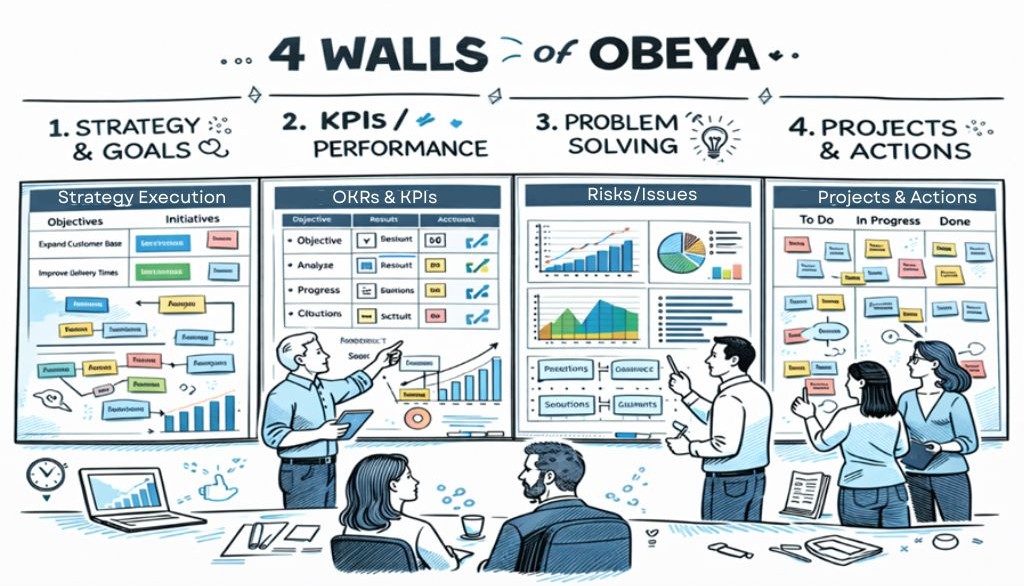
A world-class Obeya is typically structured around four key dimensions:
| Dimension | Focus | The Outcome |
| Strategy Wall | Vision, Mission, and OKRs | Total alignment with the destination |
| Performance Wall | Real-time KPIs and Lead Indicators | Immediate visibility of health and drift |
| Problem-Solving Wall | Risks, Issues, and Improvement Cycles | Rapid resolution of execution barriers |
| Action Wall | Deliverables and Milestones | Clear accountability and “who is doing what” |
Is Your Strategy Alive, or Just on Paper?
The difference between a plan and a result is visibility. In an era of unprecedented complexity, the Obeya provides the clarity needed to navigate. It shifts the culture from reporting to steering, and from managing to leading.
At its core, Obeya is about making sure that every person in the organization knows exactly where the ship is going, how fast it’s moving, and what they need to do to keep it on course.

Amardeep is a retail analyst who studies global retail trends and forecasts across diverse sectors, offering insights into the market dynamics, opportunities, and challenges faced by businesses. Her expertise spans both market-wide and city-level analysis, helping organizations navigate the complexities of the retail landscape with informed, data-driven perspectives.